
Introduction
Have you noticed how much buzz is around the Dubai real estate market right now?
It’s not just talk. In the first quarter of 2026 alone, Dubai real estate transactions surged 31% to reach AED 252 billion according to the official market data. That is a massive jump. Luxury properties are leading the charge, with high-end sales growing 64% in value compared to last year.
But here’s the thing. Even with all that growth, actually buying a premium property here is harder than it looks. Many global investors find themselves stuck. They cannot find the truly exclusive off-market listings.

They struggle with the legal paperwork. They worry about overpaying or picking the wrong neighborhood.
You are not alone if that sounds familiar.
The best luxury properties in Dubai rarely sit on public listing sites. They sell quietly through trusted networks. And the legal side of buying property as a foreign investor? It takes an expert to navigate it smoothly.
That is exactly why we built this guide. It is a clear, data-driven roadmap that shows you how to identify, evaluate, and secure a luxury property in Dubai. Whether you want to buy property in Dubai as a primary home, a second residence, or an investment asset, this guide covers the ground.
We start with the numbers that matter. Then we walk through the neighborhoods that offer the best returns. We share tips on finding off-market deals. And we explain the legal steps step by step.
If you are ready to skip the search and get straight to expert help, you can connect with Ayaz Salman for a free Dubai real estate consultation to discuss your specific needs and goals.
Let’s get into what is really driving this market and how you can take advantage of it.
Understanding the Dubai Luxury Real Estate Landscape in 2026
To really seize the opportunity in this market, you need to see how the premium segment is performing right now. The numbers are eye-opening.
According to the Dubai Land Department’s official Q1 2026 data, total real estate transactions hit AED 252 billion in the first quarter alone, a 31% jump from last year. Luxury investments specifically reached AED 87.71 billion, up 26%. That is not small change.
A detailed Mavrix Properties Q1 2026 luxury market report breaks it down further. Luxury transactions rose 23% year-on-year, with 2,847 high-end units changing hands for a combined AED 35.3 billion. Average prices in the most sought-after areas climbed 18%.
Which neighborhoods are driving all this activity? Palm Jumeirah leads with prices at AED 3,200 per square foot, up 18%. Emirates Hills is even higher at AED 4,100 per square foot, up 15%. Dubai Hills Estate and Jumeirah Bay Island are also attracting serious global attention, offering world-class golf course views and exclusive island living.
If you are focusing on Palm Jumeirah specifically, check out our complete 2026 guide to Palm Jumeirah apartments for sale. It covers the latest listings, price trends, and buying tips for that iconic neighborhood.
The surge in ultra-luxury sales is also remarkable. A Magus Properties analysis of Dubai luxury market growth shows that homes priced over $10 million skyrocketed from only 30 sales in 2020 to 500 by the end of 2025. That is a 16-fold increase in just five years.
So what is fueling this demand? Three big factors stand out.
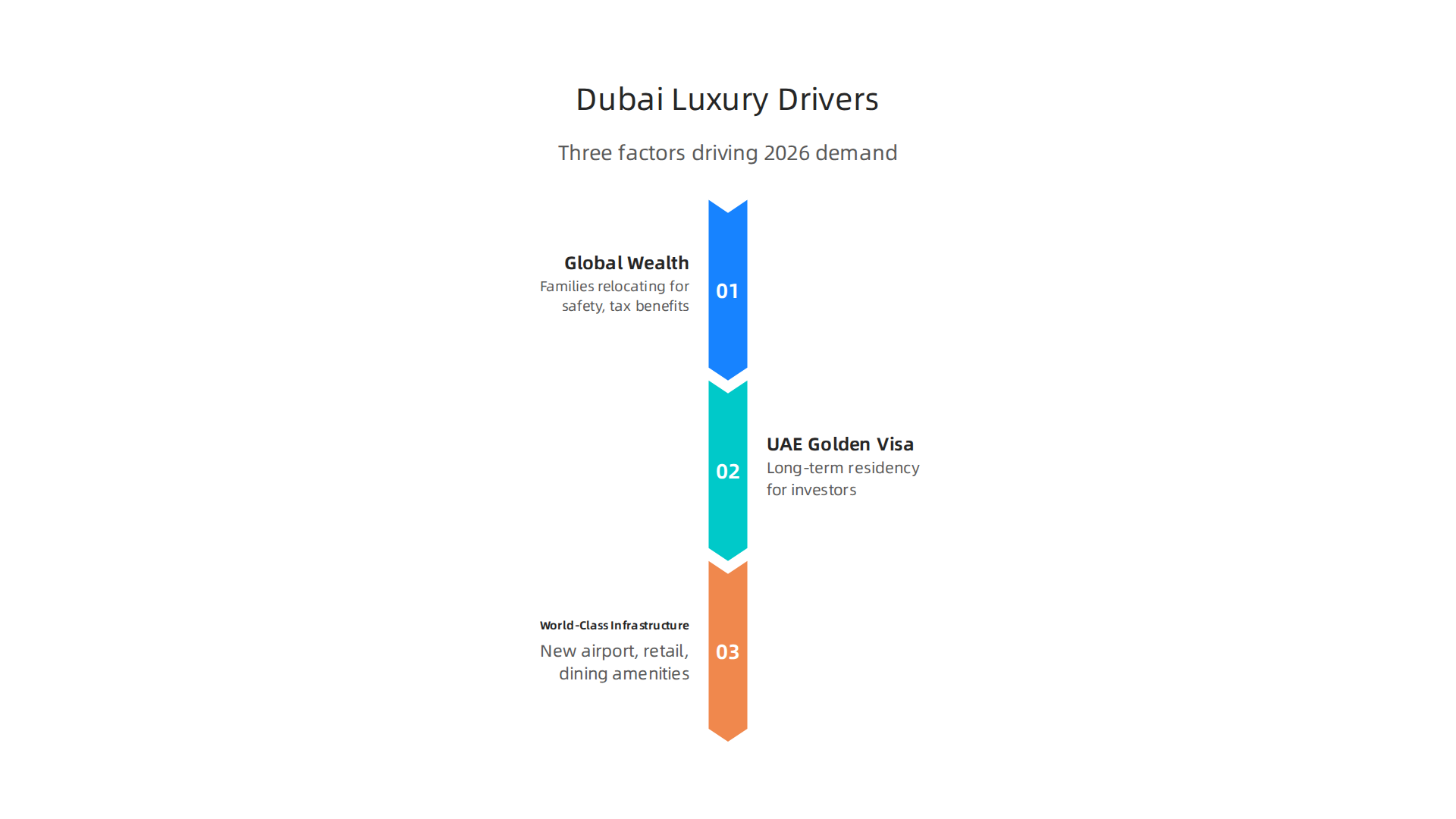
First, global wealth migration. Wealthy families and entrepreneurs are relocating to Dubai for its safety, tax benefits, and lifestyle. Second, the UAE Golden Visa program gives long-term residency to investors, making it easier to settle. Third, Dubai keeps investing in world-class infrastructure, from the new Al Maktoum International Airport expansion to premium retail, dining, and wellness amenities.
The result is a luxury market that is not just hot but also supply-constrained. Limited inventory in the most desirable areas means prices keep climbing. For buyers, that makes acting early even more important.
Key Drivers of Value in Dubai’s High-End Property Market
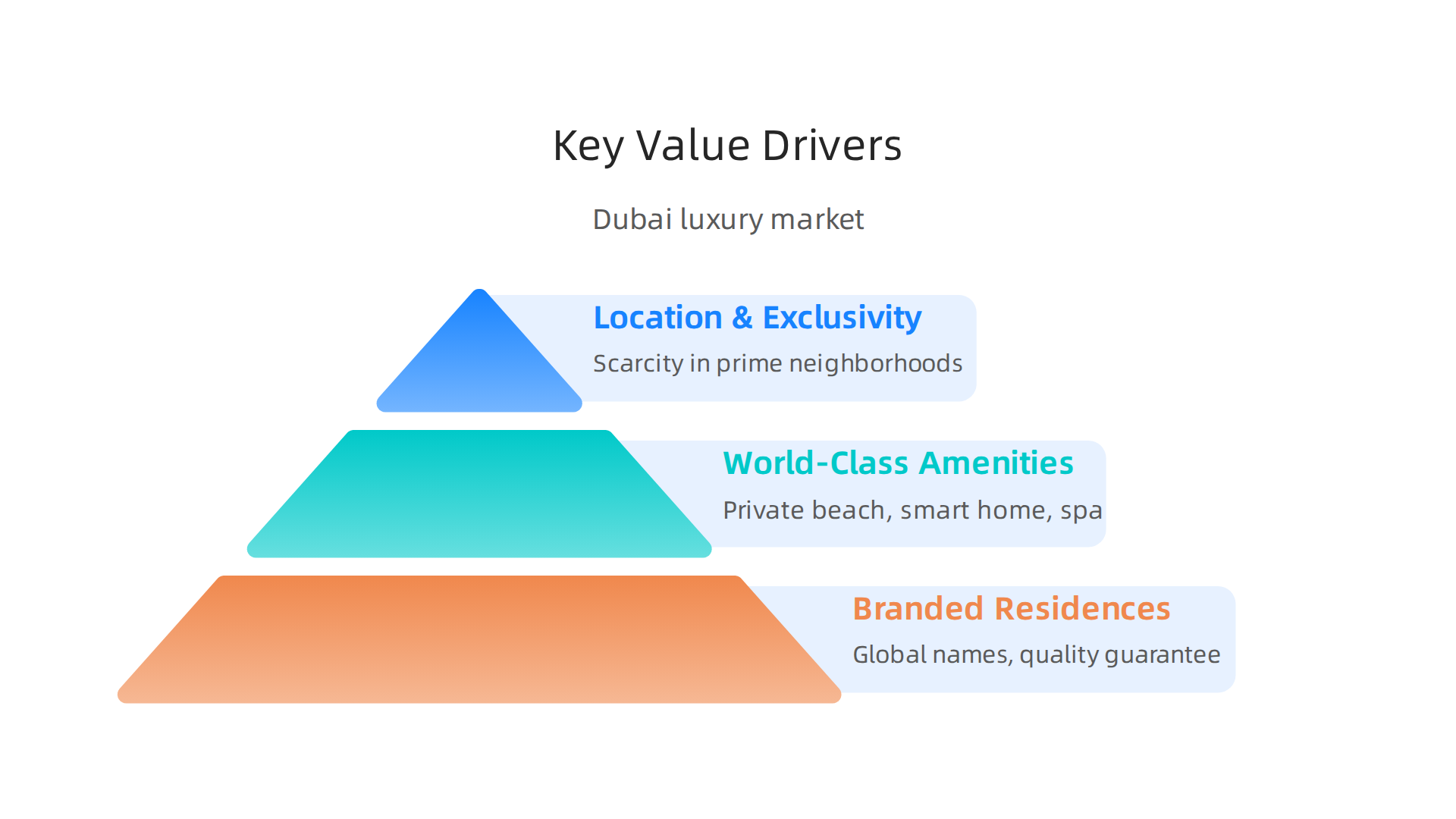
So what actually makes one luxury property worth significantly more than another in the same city? In the Dubai real estate market, three main forces drive value for premium homes: location and exclusivity, world-class amenities, and the rise of branded residences.
Location, Views, and Exclusivity
The most valuable properties sit in neighborhoods that can’t be replicated. Palm Jumeirah offers private beachfront and unmatched sea views. Emirates Hills gives you golf course panoramas and gated privacy. Dubai Hills Estate combines city access with nature. What all these spots share is scarcity. There is only so much land on the Palm, only so many villas inside Emirates Hills. That limited supply pushes prices higher year after year.
For buyers focused on this iconic island, our Palm Jumeirah apartments market guide covers the latest listings and pricing trends to help you compare options.
Elevated Amenities That Command a Premium
In 2026, basic pools and gyms don’t cut it for high-end buyers. The best luxury properties now include:
- Private beach access
- Marina berths for yachts
- Smart home technology with full automation
- Dedicated concierge services
- Wellness amenities like cryotherapy and spa suites
These features turn a property into a lifestyle. Buyers are willing to pay more because they get convenience, health, and status all in one place. Developers who invest in these amenities see faster sales and stronger resale values.
Branded Residences: The Ultimate Value Driver
The biggest trend shaping elite property Dubai is the explosion of branded residences. These are luxury homes developed in partnership with global names like Armani, Bulgari, Four Seasons, and Bugatti. The brand oversees every detail, from design to service standards.
And the numbers back up the hype. According to a 2026 analysis of the branded residences premium in 2026, these properties trade at 30% to 50% above comparable non-branded units in the same neighborhood. In top areas like Palm Jumeirah, the gap can exceed 60%.
Why? Because a brand name acts as a quality guarantee. The next buyer trusts that Armani or Bulgari standards will hold up over time. That trust supports higher prices and faster resales. Dubai now leads the world with over 60 branded projects, more than any other city.
If you are considering buying property in Dubai, branded residences offer both prestige and strong investment potential. They combine location, elite amenities, and a trusted name all in one package.
Ready to explore your options? Get your FREE Dubai Real Estate Consultation today and speak directly with an expert who can help you find the best luxury properties that match your goals.
Accessing Off-Market and Exclusive Listings
Imagine you have saved to buy a premium home in Dubai. You check the popular property portals every day. Yet somehow, the most incredible villas on Palm Jumeirah or the most private mansions in Emirates Hills never show up in your search results. That is not a coincidence. A big chunk of the best luxury properties never get listed publicly at all.
In fact, around 20% to 30% of luxury transactions in Dubai’s top neighborhoods happen through what the industry calls off-market listings. These are properties sold privately, often between a seller and a buyer who already know each other. According to an overview of exclusive off-market listings in Dubai, villas in areas like Palm Jumeirah, Emirates Hills, and Dubai Hills Estate frequently trade without ever hitting the open market.
Sellers choose this route for privacy. They may not want neighbors or colleagues to know they are selling. Others want to test a high price without the pressure of a public listing. And some simply prefer a discreet, fast transaction with a serious buyer.
So how do you get access to these hidden opportunities? It is not as simple as clicking a button. You need to build real relationships with agents and brokers who specialize in elite property Dubai.
These agents guard their off-market inventory closely. They share it only with buyers who have a proven track record of closing deals quickly and without trouble.
Attending industry events like Cityscape Global or private investor gatherings helps. You can also connect with family offices and wealth managers who often hear about off-market deals before anyone else. Those connections trust you more if you come prepared with proof of funds and a clear idea of what you want.
Discretion works both ways. When you view an off-market home, you will likely sign a non-disclosure agreement (NDA). You agree not to share details about the property, the price, or even the seller’s identity. This protects everyone involved and shows that you take the process seriously.
Building these relationships takes time, but the payoff is access to some of the most desirable properties in the Dubai real estate market. Once you earn a reputation as a serious, discreet buyer, agents will start reaching out to you first when a new off-market listing becomes available.
If you want to skip the public listings and get straight to the hidden gems, a trusted local expert can make all the difference. Our guide on how to buy luxury real estate in Dubai in 2026 walks you through the entire process from start to finish.
Ready to uncover off-market opportunities that others cannot find? Reach out for a FREE Dubai Real Estate Consultation today and let an experienced professional connect you with the best private listings in the city.
Legal Framework and Investment Regulations for Foreign Investors
Once you have found an off-market gem, you need to understand the legal side of buying property in Dubai. The good news is that the rules are straightforward and very friendly to foreign buyers.
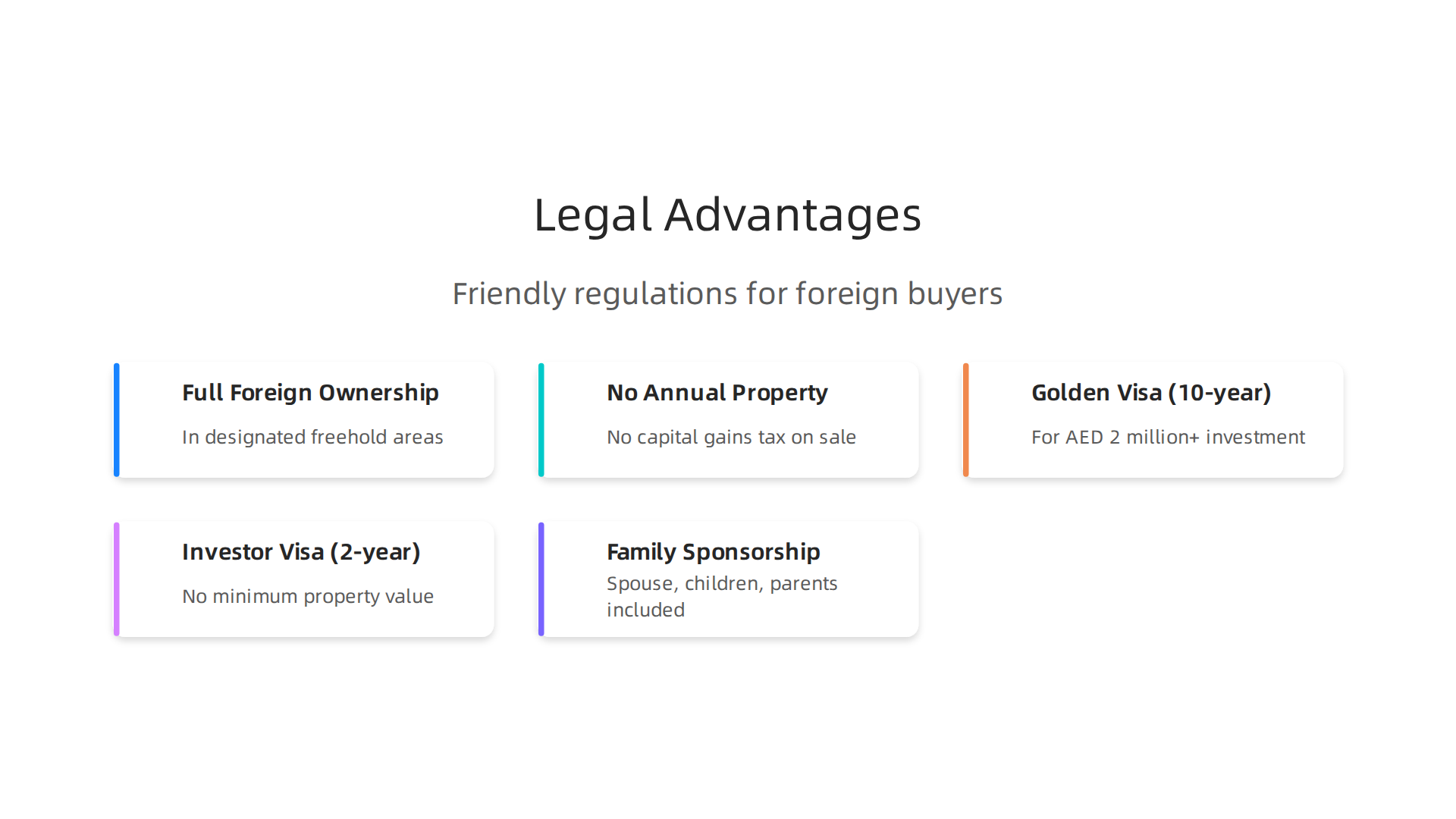
Since 2002, Dubai has allowed full foreign ownership in designated freehold areas. This means you can own the property completely, just like a local. These freehold zones include popular neighborhoods like Downtown Dubai, Dubai Marina, Palm Jumeirah, Emirates Hills, and Jumeirah Village Circle. You do not need to be a UAE resident to buy property there. For a complete list of areas and the buying process, check out our guide on legal steps for foreigners to buy property in Dubai.
The registration of your purchase happens through the Dubai Land Department (DLD). The main cost is a transfer fee of 4% of the purchase price. You will also pay small admin fees and a trustee office fee (AED 4,000 for properties over AED 500,000). After payment and document checks, you receive a Title Deed that proves you own the property.
One of the biggest advantages of the Dubai real estate market is its tax structure. There is no annual property tax. There is no capital gains tax when you sell. That means your profits stay with you. However, you do have to pay ongoing service charges to the building or community management. These cover maintenance, security, and shared facilities.
Another huge benefit is the residency options tied to property ownership. In 2026, the rules have become even more attractive. A property investment of AED 2 million or more qualifies you for a 10-year Golden Visa. This allows you to live, work, and sponsor your family in the UAE. Even better, recent updates have removed the minimum property value for a standard 2-year investor visa. As one legal source explains, Dubai has eased these rules to make the visa process simpler and faster for single property owners, with approval typically within 10 to 15 working days.
The Golden Visa also lets you sponsor your spouse, children, and parents. And if you are over 55, you may qualify for a retirement visa through property investment.
Understanding these rules helps you buy property in Dubai with confidence. If you are ready to take the next step, connect with an expert who can guide you through the legal process. Get a FREE Dubai Real Estate Consultation today to start your journey.
Assessing Property Valuation and Authenticity in the Luxury Segment
You have found a spectacular villa on Palm Jumeirah with sea views and top finishes. The price tag is high, but is it fair? For ultra-luxury homes, this question is tricky because there are often few similar properties to compare. That is why getting an independent third party valuation is not optional. It is a must.

Valuation in the Dubai real estate market relies on three main methods. The comparable sales approach looks at recent sales of similar properties in the same area.
The income approach calculates value based on rental income. The cost approach estimates what it would take to rebuild the property today. For luxury assets with limited data, professional valuers blend these methods. To dive deeper into these techniques, you can learn more about the Dubai property valuation methods and tools used by experts.
Red flags can hide in luxury listings. Watch for inflated square footage that does not match the floor plan. Check if finishes are genuinely modern or just staged to look new. Be cautious if the seller bases the price on a sale from two years ago. The market has changed since then. Always ask for recent, verified comparable transactions from the Dubai Land Department.
Due diligence goes beyond valuation. You must verify the title deed to confirm the seller truly owns the property. You also need to check for encumbrances, such as outstanding mortgages or legal disputes. A structural survey from an accredited engineer will reveal hidden issues like plumbing problems or foundation cracks. Finally, review the community regulations and service charges. Some luxury buildings have high annual fees that affect your total cost.
If you want to explore options in Dubai’s premium neighborhoods, consider reading our guide to buying luxury property in Dubai to understand the full process.
Taking these steps helps you buy property in Dubai with confidence. You protect your investment and avoid costly surprises. In a market where every dirham counts, a thorough assessment is your best tool.
Risk Management and Future Outlook for Luxury Investments
You have researched valuations, verified documents, and chosen a stunning villa. Now comes the part many buyers skip: planning for risk and understanding the future.

The dubai real estate market rewards those who think ahead.
Market cycles directly impact liquidity. In a strong economy, best luxury properties can sell in weeks. During a slowdown, the same home may sit for months. How fast can you sell if your situation changes? That depends on pricing it right. Professional valuation methods give you a clear picture. For example, the comparable sales method works best when at least five similar transactions exist from the past six months. This shows that having current market data is key to knowing your property’s position. When you need to sell quickly, accurate pricing helps you find a buyer faster.
Geopolitical and economic risks also matter. Oil price shifts and regional tensions can affect investor confidence. But Dubai has built a diversified economy. Tourism, trade, technology, and finance now drive growth. This reduces the impact of any single risk. Plus, global uncertainty often pushes wealthy families to seek safe havens. Dubai’s stable laws and high quality of life make it a top choice for elite property dubai investments.
The long-term outlook remains bright. Global wealth migration keeps bringing high-net-worth individuals to the city. The Expo City legacy continues to attract events and businesses. Major infrastructure projects like new metro lines and Al Maktoum International Airport expansion open up new neighborhoods. These factors support steady demand for years to come.
For a deeper look at how these trends affect your buying decisions, read our guide on how to buy luxury real estate in Dubai in 2026. It walks you through each step from research to closing.
Ready to discuss risk management and future opportunities for your property search dubai? Get a FREE Dubai real estate consultation with Ayaz Salman. He can help you build a strategy that fits your goals.
Building Your Advisory Team: Who You Need
You know what villa you want. You have a budget in mind. But buying luxury property in Dubai is not something you do alone. The smartest investors build a team of experts before they even start looking. Here is who you need on your side.
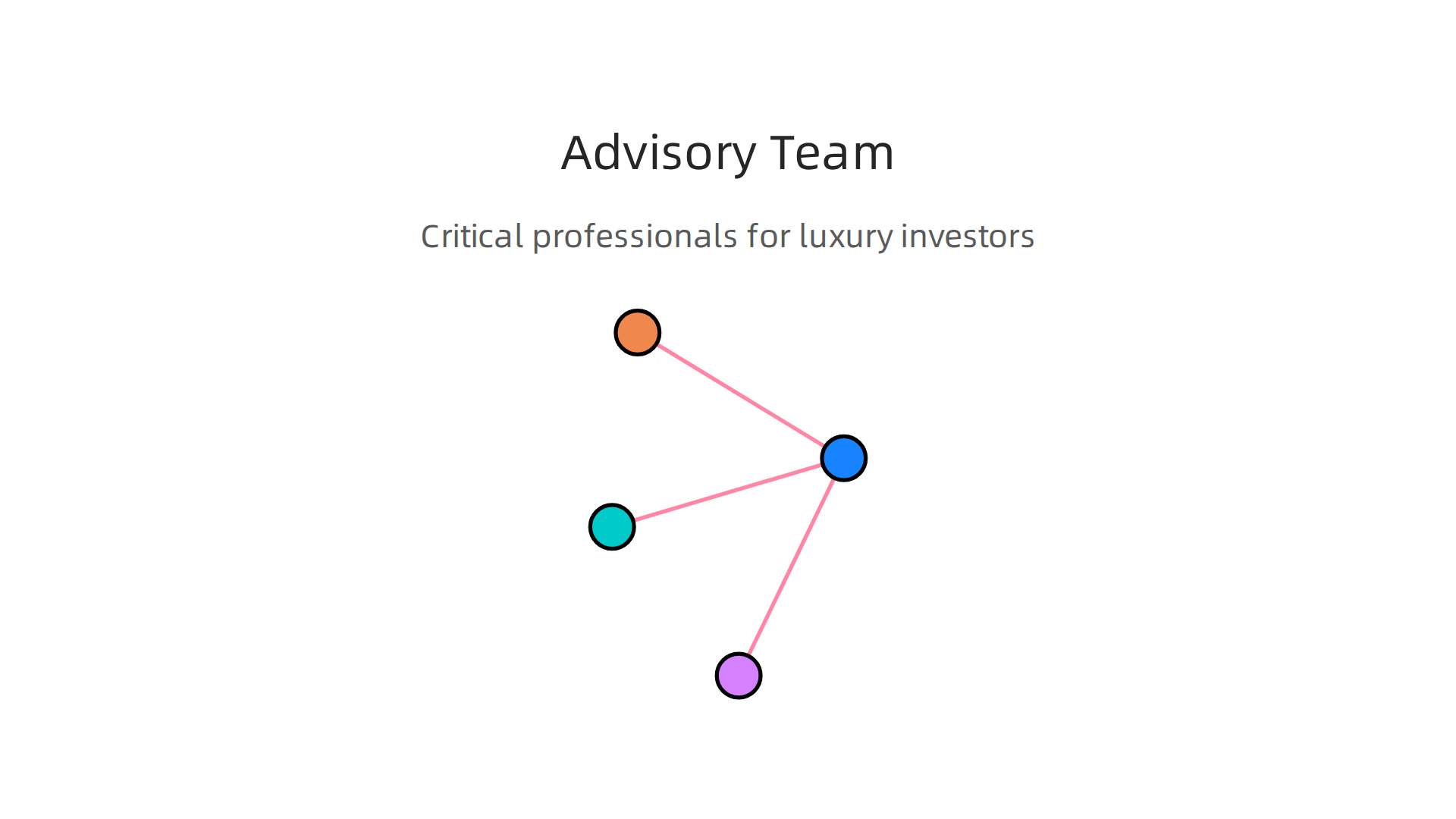
Start with a buyer’s agent who specializes in high-end homes. Not every agent knows the luxury market. You want someone who has closed deals in Palm Jumeirah, Emirates Hills, and Dubai Hills Estate. A well-connected agent can show you homes that never hit public listings. In fact, about 10% of Dubai sellers keep their properties off the Multiple Listing Service. That is why you need an agent with deep relationships. They give you access to those hidden opportunities. Check their track record. Ask for references from past luxury buyers. A good agent is transparent about their process and their network.
Next, bring in a legal advisor who understands Dubai property law. Foreigners can own freehold property in designated areas. But the rules change. As of 2026, the minimum property value for a two-year investor visa is gone. Still, you need someone to review contracts, verify developer registrations, and handle the Dubai Land Department paperwork. A lawyer who specializes in real estate saves you from costly mistakes.
You also need a property valuer. Do not rely on the seller’s price alone. A certified valuer uses comparable sales, rental yields, and market data to tell you what a home is really worth. This helps you negotiate with confidence. And do not forget a tax or estate planner. Even though Dubai has no property tax, you still need to think about inheritance, ownership structures, and how the property fits into your global portfolio.
How do you vet these advisors? Look for people who answer your questions clearly. Check their references. Ask if they have access to exclusive off-market listings. The best local partners have a network that includes developers, other agents, and legal firms. They can connect you to opportunities before anyone else sees them.
Building the right team saves you time, protects your privacy, and ensures every step follows the law. If you want to learn more about the full buying process, read our guide on how to find and buy a luxury property in Dubai. It gives you a clear roadmap from start to finish.
Summary
This guide explains how to identify, evaluate and buy luxury property in Dubai in 2026, using recent market data and practical steps for international buyers. It opens with transaction figures showing a sharp rise in premium sales and highlights the neighbourhoods commanding the highest prices, such as Palm Jumeirah and Emirates Hills. You will learn the main value drivers—location, amenities and branded residences—and why branded projects trade at large premiums. The article covers how to access off-market listings through trusted agents, the legal process for foreign buyers (including fees and Golden Visa rules), and how to verify valuation and title. It also explains how to assemble a specialist advisory team, spot red flags, and plan exit and risk strategies so you can buy with confidence or connect with an expert for a personalised consultation.